When a sudden ringing sound appears in your ear, it can be unsettling. For many, the first thought is: Am I going deaf? Or worse, am I losing my mind? Understanding what tinnitus actually is is the first step toward calming your system and taking back control.
Let’s break down exactly what’s happening in your ears and brain when you hear that persistent ringing.
What Exactly Is Tinnitus?
Tinnitus, or tinnitus aurium, comes from the Latin words tinnire (to ring or tinkle) and aures (ears). It literally means the ringing or tinkling of the ears.
According to Dr. Jastreboff, a leading tinnitus researcher, tinnitus is “the perception of sound that results from activity in the central nervous system without a corresponding mechanical vibration of the cochlea in the ear and without an external stimulus.”
In plain terms, tinnitus is a phantom sound. A sensation of hearing something that isn’t actually there, caused by overactivity in your brain’s auditory system.
What Types of Tinnitus Are There?
Most people with tinnitus have what’s known as subjective tinnitus, sound that only they can hear. But there are more types worth mentioning.
Types of tinnitus:
- Subjective tinnitus: Not audible externally; the most common form.
- Somatic tinnitus: Often linked with jaw or neck issues. The sound may change with movement, but physical tension alone doesn’t always mean it’s somatic.
- Objective tinnitus: Extremely rare; can be heard using a stethoscope. Often related to vascular or muscular issues.
- Pulsatile tinnitus: A type of tinnitus where a person hears a rhythmic sound, often described as a whooshing or throbbing, that is in sync with their heartbeat.
What Does Tinnitus Sound Like?
It’s not always a high-pitched ringing. Tinnitus can also sound like hissing, buzzing, beeping, wind noise, whistling kettles, bells and even like a jet engine.
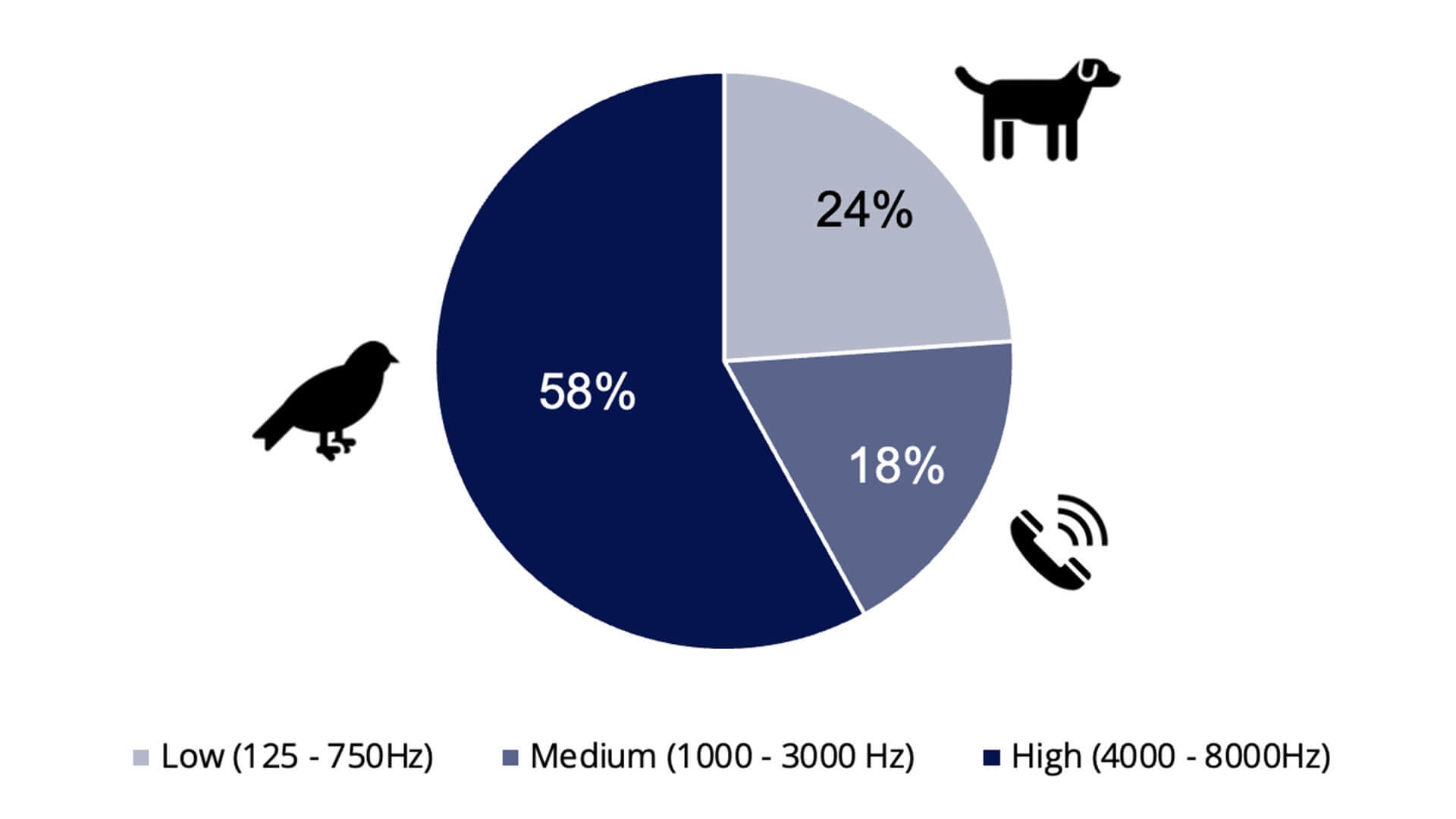
A large study found that:
- 58% of people hear a high-pitched sound (like birdsong)
- 18% hear a mid-pitched sound (similar to a phone ringing)
- 24% hear a low-pitched sound (as low as a barking dog)
And you may not hear just 1 sound. Most people hear 2 or 3. It’s common to become more aware of internal sounds, especially in silence. That doesn’t mean your tinnitus is worsening, you just hear them because you’re so focused on your tinnitus and your hearing becomes more sensitive as a result.
Hearing Loss Is the Most Common Cause of Tinnitus
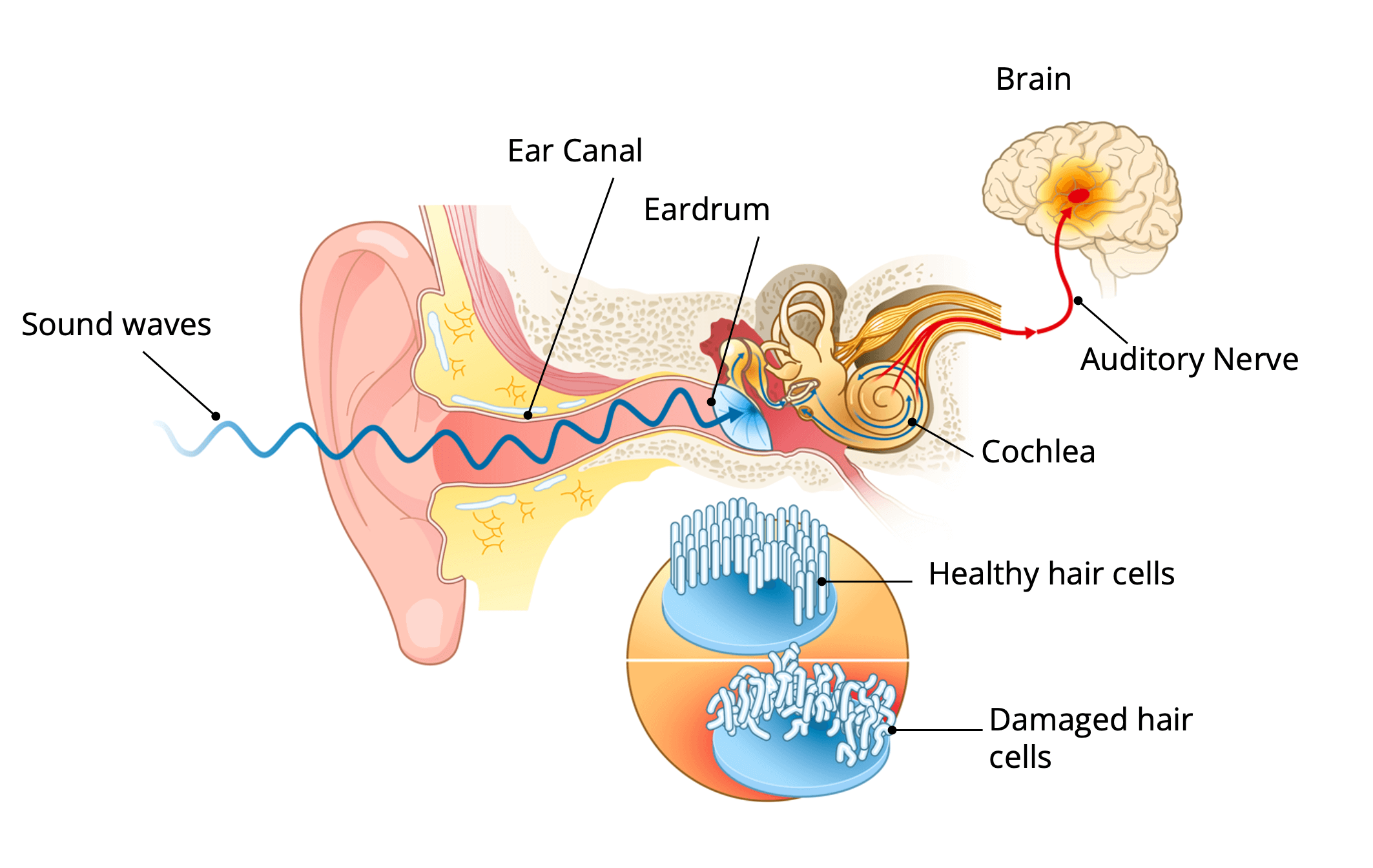
Tinnitus can stem from many factors. Hearing loss, stress or anxiety, certain medications, ear infections, noise, trauma, improper earwax removal and so on. The most common cause is hearing loss. But that doesn’t mean everyone with hearing loss develops tinnitus. Nor does it mean your hearing test will always detect it. Hidden hearing loss, especially in high frequencies, is very common and not always picked up in a standard test.
What Happens When Hair Cells Are Damaged?
Inside your inner ear are thousands of tiny hair cells that act like microphones. Each one detects a specific frequency. When they’re intact, they convert sound waves into electrical signals your brain can interpret. But loud noise, aging, or ototoxic medication can damage or destroy these cells. When they stop functioning properly, the signals they send become distorted or disappear entirely. Your brain, trying to compensate, turns up the internal volume. And in that process, it creates the phantom sound that you hear as tinnitus.
Imagine pouring water over a microphone and then listening through the speaker. The result: static, feedback, distortion. That’s what your brain hears when hair cells malfunction. Tinnitus is not in your ears. It’s your brain’s overreaction to faulty input.
Is It Normal To Hear Tinnitus?
Scientists demonstrated that tinnitus sound by itself is far more normal than people think. A famous study placed 80 people in a soundproof room. Within minutes, 94% heard tinnituslike sounds. The absence of ambient noise made their brains “turn up the gain,” revealing internal sounds that are usually masked by daily life.
Tinnitus by itself isn’t a problem. It becomes one when the brain responds to it as if it’s a threat.

“But My Friend Is Not Bothered By It!”
Whether or not tinnitus becomes a serious issue often depends on your reaction to it. That’s why 2 people can have a completely different outcome when they hear tinnitus.
- Person 1: One person hears ringing and shrugs it off. Maybe they read a bit about it, realize it’s common, and move on. Their brain quickly adapts. This process is called habituation.
- Person 2: Another person hears the same sound but panics. They fear it’s permanent, dangerous, or a sign of something worse. This triggers stress, which heightens sensitivity. They start researching obsessively, trying every remedy they find online. Their tinnitus feels louder and more threatening every day.
Same sound. Completely different outcomes.

Should You Be Worried?
Don’t worry, you’re not going crazy. And tinnitus does not cause deafness (but there are some diseases that can cause deafness and tinnitus, so have yourself checked out by your doctor!). Tinnitus is a real, common response to a range of triggers, especially hearing loss, stress and anxiety. It doesn’t have to become a chronic problem.
If you’re stuck in the vicious cycle of fear and over-focus, the good news is: you can reverse it. But first, stop searching for miracle cures and start understanding your tinnitus.
I recommend you start by joining my free tinnitus webinar. There, I will explain how the Still Tinnitus method can help you to calm your tinnitus and reclaim your life, without traveling, wait times, or group sessions. Even though there’s no cure for tinnitus, a full recovery is possible. Hang in there, and see you in the webinar!