If you’ve been diagnosed with tinnitus, chances are you’ve already Googled countless treatments including sound therapy, meditation, supplements, or acupuncture for example. Every source seems to say something different. One therapist tells you to mask the sound, another insists you should listen to it.
So what should you believe? What actually works? And can you safely combine treatments without making things worse?
By the end of this blog, you’ll understand the pros and cons of each approach and more importantly, know exactly what steps to take today to move toward real relief. Here’s what the science + my own experience shows.
Only 4 Tinnitus Treatments Are Scientifically Proven
In one of the largest tinnitus studies ever conducted, researchers found that out of the hundreds of treatments advertised online, these 4 have a solid scientific foundation:
- Tinnitus Retraining Therapy (TRT)
- Cognitive Behavioral Therapy (CBT)
- Acceptance & Commitment Therapy (ACT)
- Mindfulness (MFN)
These 4 are the ones used by top clinics around the world.
However, each method comes with its own strengths and challenges. And they often seem to contradict one another.
1. Tinnitus Retraining Therapy (TRT)
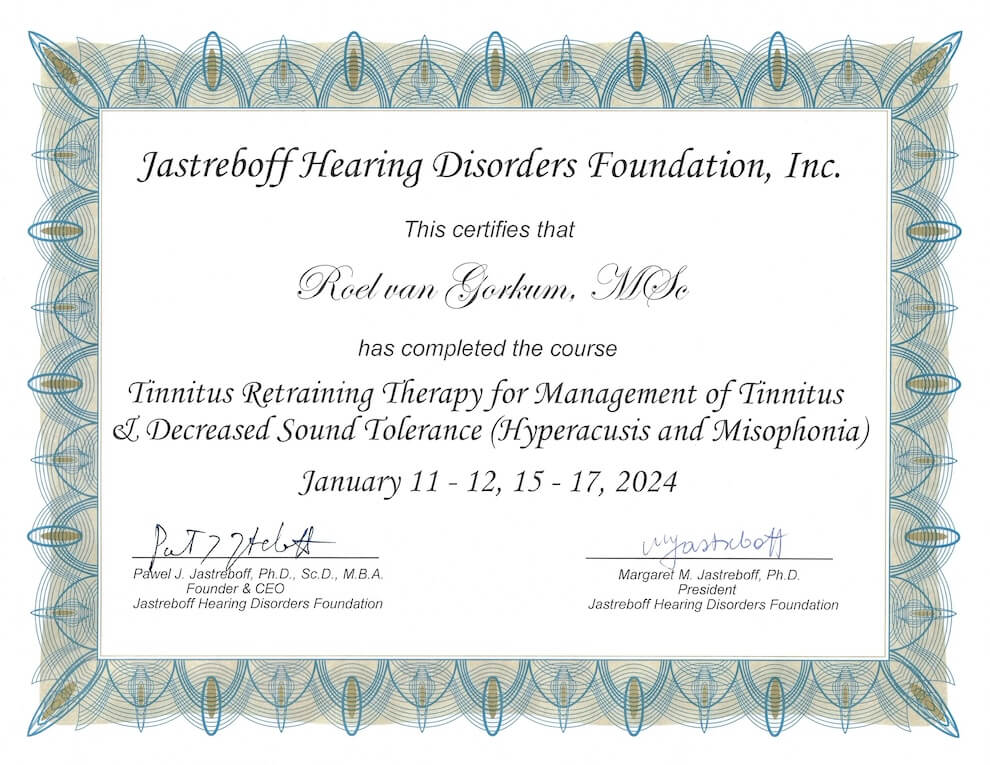
TRT was developed by Prof. Pawel Jastreboff and Dr. Hazell. It is based on 2 components: sound therapy and counseling. The sound therapy uses masking noises, usually soft, neutral sounds, to reduce the contrast between tinnitus and silence. This makes the ringing less noticeable. The counseling component helps retrain the brain to interpret the tinnitus sound as non-threatening.
Challenges with TRT for Tinnitus
- TRT only works when applied properly, yet very few professionals are certified to do so.
- Some older TRT approaches heavily rely on expensive ear level noise generators, although recent evidence shows they are often unnecessary when the method is applied correctly.
- Masking alone is not a viable solution and may lead to long term dependency.
Important questions often go unanswered:
- How long should you use masking sounds?
- Which sounds are effective?
- What if you can’t play them at work?
- How do you avoid becoming dependent on them?
2. Cognitive Behavioral Therapy (CBT)
CBT is a psychological method that helps you change how you react emotionally to difficult situations, including tinnitus. It teaches you to identify negative thought patterns and reframe them in a healthier way. The goal is to reduce distress and improve coping.
- It’s the most commonly used method among psychologists.
- The concept is powerful, but its application to tinnitus requires specific expertise.
Challenges with CBT for Tinnitus
- The primal brain, which triggers anxiety, doesn’t respond well to thoughts alone. It needs evidence.
- Most CBT therapists don’t have tinnitus and rely on generic protocols.
- Quality of psychologists varies, and wait times are long, often 6 months or more.
- CBT specifically for tinnitus is rarely covered by insurance, and effective treatment can cost over $2000.
3. Acceptance & Commitment Therapy (ACT)
ACT is a form of behavioral therapy created by Dr. Steven Hayes. It helps people accept difficult experiences without trying to control them. For tinnitus, this means learning to accept the sound rather than constantly fighting or avoiding it. The therapy emphasizes committing to actions that align with your values, even when tinnitus is present, and helps shift focus away from the tinnitus and toward meaningful activities.
Challenges with ACT for Tinnitus
- If applied incorrectly, ACT can unintentionally reinforce avoidance behavior.
- Relying solely on distraction may block true habituation.
- Many people attempt to apply ACT independently and only seek guidance after prolonged trial and error.
4. Mindfulness
Mindfulness is the practice of paying attention to the present moment without judgment. In the context of tinnitus, this means observing the sound as it is, without trying to escape or change it. Although it often includes meditation, mindfulness is a broader skill set that helps reshape how the brain processes tinnitus. When practiced correctly, it teaches the brain that the tinnitus signal is not dangerous, which reduces the stress response.
And no, mindfulness is not spiritual or reserved for people in some elevated state of being. It’s a powerful tool for becoming present in the moment, something you can easily apply at work, at home, or even while commuting.
Challenges with Mindfulness for Tinnitus
- Many misunderstand mindfulness as passive silence or religious practice.
- Fear of focusing on tinnitus keeps people from using the method effectively.
- When applied correctly, it can be transformative, but few stick with it long enough to see results.
Contradicting Therapies Confuse Patients
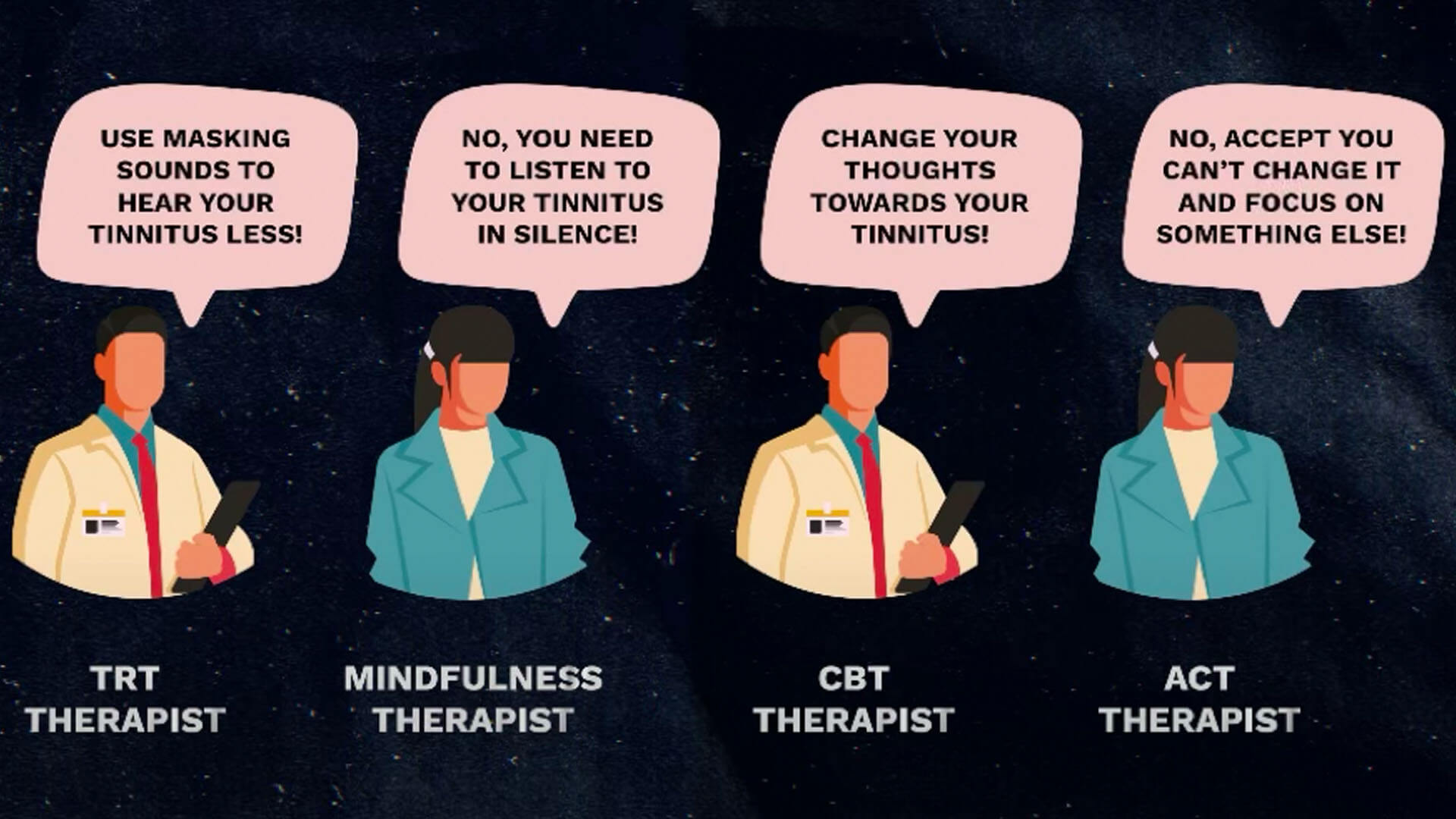
Here’s where the confusion really begins:
- The TRT therapist says: Use masking sounds to hear your tinnitus less.
- The Mindfulness coach says: No, listen to it in silence and accept it.
- The CBT expert says: Change your thoughts about the sound.
- The ACT therapist says: Stop trying to change anything, just move on.
This conflicting advice leaves many people feeling overwhelmed and stuck. It’s no surprise that many patients bounce from one method to another, trying everything yet never feeling confident about their approach.
Without a clear direction, even the best treatments can lose their effectiveness.
A Better Approach: Combining the Strengths of Each Method
How do you move forward when even the experts disagree? The answer is not to pick just one therapy and hope it works. The real breakthrough comes from understanding how each method contributes a valuable piece of the puzzle and learning how to combine them in a way that fits your situation.
That’s exactly what took me years of trial and error to figure out: how to integrate TRT, CBT, ACT, and mindfulness into one clear, practical method that avoids confusion and contradiction.
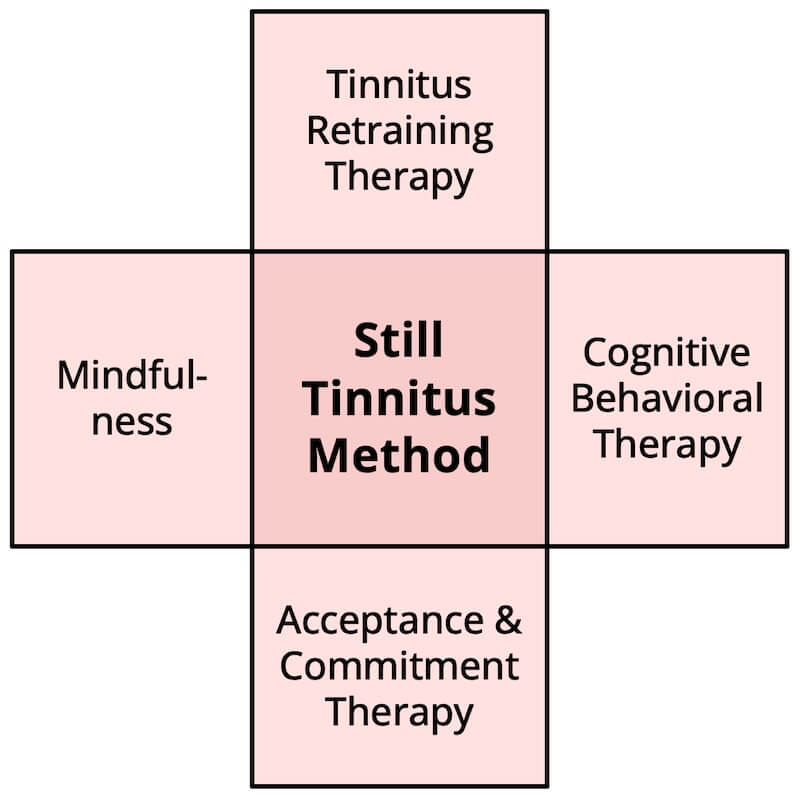
This combined method, known as the Still Tinnitus Method, is backed by scientific evidence and has been validated by independent researchers. It led to the ultimate goal in tinnitus recovery: habituation of perception. Not just being okay with tinnitus, but often not noticing it at all. From sleepless nights and overwhelming noise, to peaceful days, sometimes even silence.
Free Tinnitus Webinar
If you found this helpful, I recommend joining my free tinnitus webinar. There, I will explain how the Still Tinnitus method can help you to calm your tinnitus and reclaim your life, without traveling, wait times, or group sessions. Even though there’s no cure for tinnitus, a full recovery is possible. Hang in there, and see you in the webinar!