Trying to cure tinnitus is often a dead end and it can even stand in the way of real recovery. By reading this post you will save yourself months of trial and error, frustration, and wasted money on ineffective treatments. Fortunately, there is something positive to take away: the next best thing to a cure. This method, which I’ll share with you below, has helped many find lasting relief from tinnitus and even experience moments of silence again.
Is There A Cure For Tinnitus?
If you’ve just started experiencing tinnitus, it’s natural to start looking for a cure. Even if a quick Google search says there isn’t one, you still want to know if that’s really true. The idea that there’s no solution feels impossible to accept, especially when over 900 million people worldwide, roughly 1 in 6, are affected.
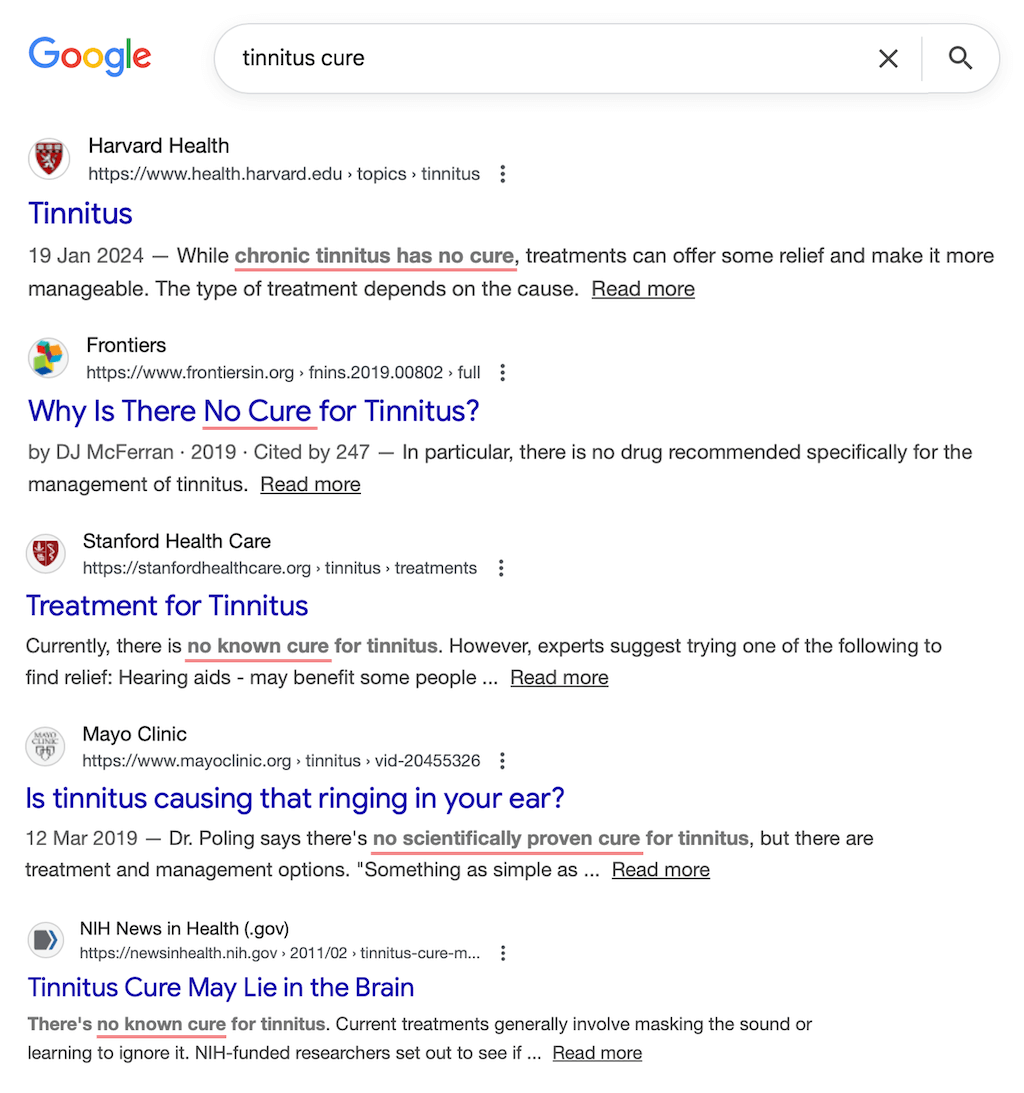
All trustworthy sources agree: there is currently no cure for tinnitus. That message alone can make tinnitus worse. It’s frustrating, disheartening, and easy to doubt. Surely someone must have found a fix, right? But while there is way forward, officially, no cure exists. Accepting that hard truth is the first step towards recovery.
Don’t Trust Social Media Tinnitus ‘Gurus’
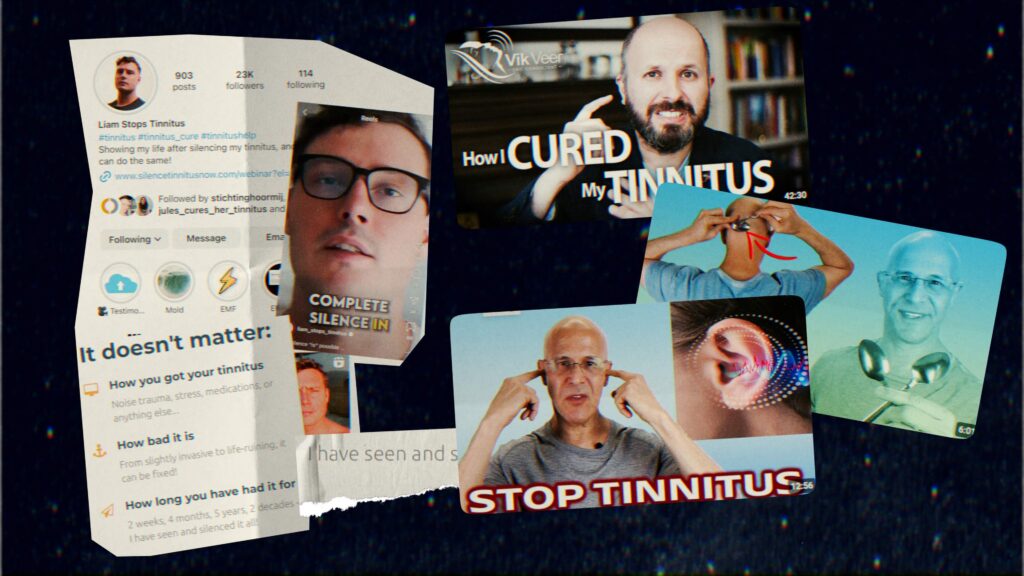
Despite what trusted sources say, the internet is full of miracle claims. YouTube is flooded with videos promising to cure tinnitus overnight: pulling your ears, tapping your head with a spoon, or taking exotic supplements. These videos get millions of views, and they often sound convincing. But none of them are backed by science.
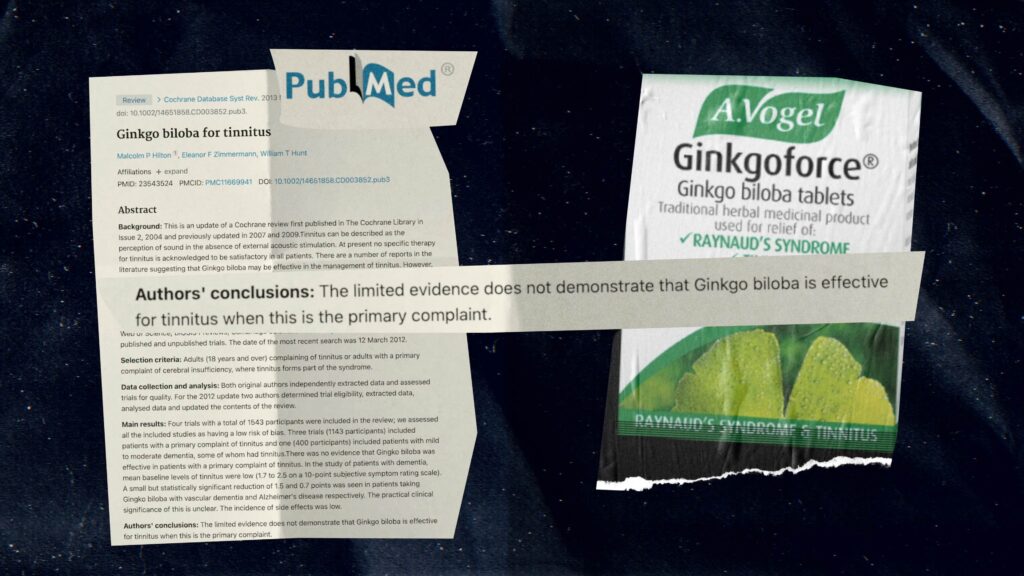
Some people genuinely believe they’ve been cured by these methods. And sure, someone might quit coffee or take ginkgo biloba and see an improvement. But research tells a different story. For example, a large peer-reviewed study found no consistent link between caffeine intake and tinnitus. Similarly, this study found no reliable evidence that ginkgo biloba helps treat tinnitus. Large studies show no direct connection between these remedies and actual tinnitus relief.
Some of these ‘gurus’ receive glowing reviews or are frequently mentioned in forums as success stories. But it’s important to understand that most improvements are due to natural habituation or the placebo effect. This doesn’t mean lifestyle changes are useless. Improving your resilience, managing stress, and sleeping well can support recovery. But none of these are miracle solutions. And blindly chasing unproven ideas only adds stress, delays recovery, and often costs a lot of money.
3 Reasons Why a Tinnitus Cure Doesn’t Exist
Understanding why there’s no cure helps you stop searching for one and start improving. Here are the 3 main reasons:
Reason 1: Hearing Loss Is Irreversible
Over 80% of tinnitus cases are linked to hearing loss. This usually involves damage to tiny hair cells in the cochlea, the inner ear. These cells help transmit sound signals to your brain. When they’re damaged or destroyed through aging, illness, or loud noise exposure, those signals are lost.
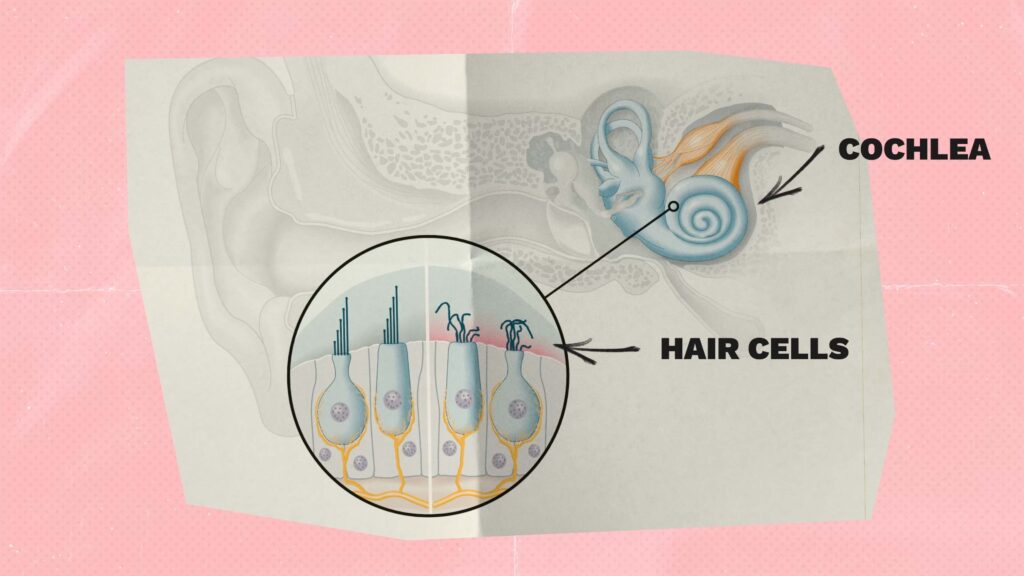
The brain tries to fill in the gaps by generating sound, which we perceive as tinnitus. But once those hair cells are gone, there’s no way to restore them. Surgery can’t fix them, and no drug can regrow them. This is a major reason why there’s no cure.
Reason 2: Tinnitus Has Many Causes
Tinnitus isn’t a single condition. It can be triggered by stress, neck or jaw problems, medications, high blood pressure, anxiety, or trauma for example. Your ears and brain form a complex system, and tinnitus can appear when different parts of that system go out of balance. Even though there are 7 main causes, there is so much variation that there’s no one-size-fits-all solution. This complexity makes finding a universal cure nearly impossible.
Reason 3: Your Brain’s Stress Response Fuels Tinnitus
Tinnitus isn’t just about sound, it’s about how your brain reacts to it. The noise triggers your fight-or-flight system, the same stress response that kicks in when you sense danger. This response is deeply hardwired into the brain, dating back to prehistoric times when sensing danger meant survival.

The more you fear or focus on the sound, the more it activates this stress loop. That’s why tinnitus can become louder or more intrusive over time, even if the original sound doesn’t change.
Experimental Treatments: Innovative or Unrealistic?
Because tinnitus is so complex, research experiments have become more and more unusual. For example, we have:
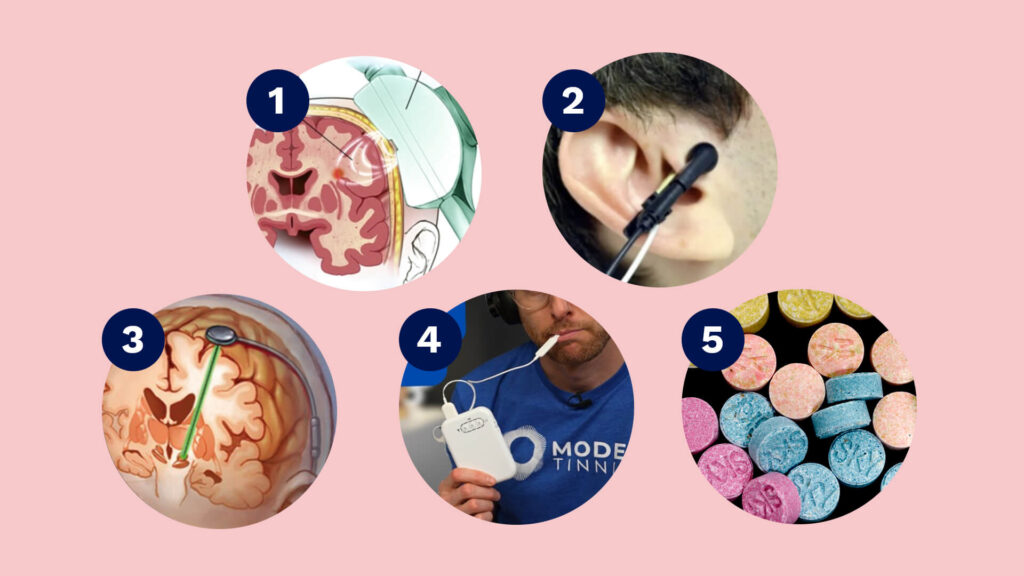
- Transcranial Magnetic Stimulation: Electromagnetic coils on your brain.
- Earlobe stimulation: Devices that electrically stimulate the nervus vagus.
- Deep Brain Stimulation: Implanting electrodes deep into the brain.
- Biomodal stimulation: A device sending electric impulses to your tongue combined with masking sounds (like the Lenire device)
- MDMA: This psychoactive drug is also being explored as a potential treatment.
This research is all fascinating and worth following. Hopefully, someday, they’ll find something that can truly take away the tinnitus sound for everyone. But for now, none of them cure tinnitus.
The Cure Obsession Is Keeping You Stuck
Hoping for a cure is understandable. But constantly trying new, unproven treatments keeps you stuck. Each failed attempt adds stress and reinforces the belief that you’re not getting better. And stress is exactly what fuels tinnitus. So stop searching for miracle cures, they don’t work and only delay your recovery.
Habituation: The Next Best Thing to a Cure
Science shows that while we usually can’t fully get rid of persistent tinnitus, we can learn to live without being disturbed by it. This process is called habituation, and it unfolds in 2 distinct levels:
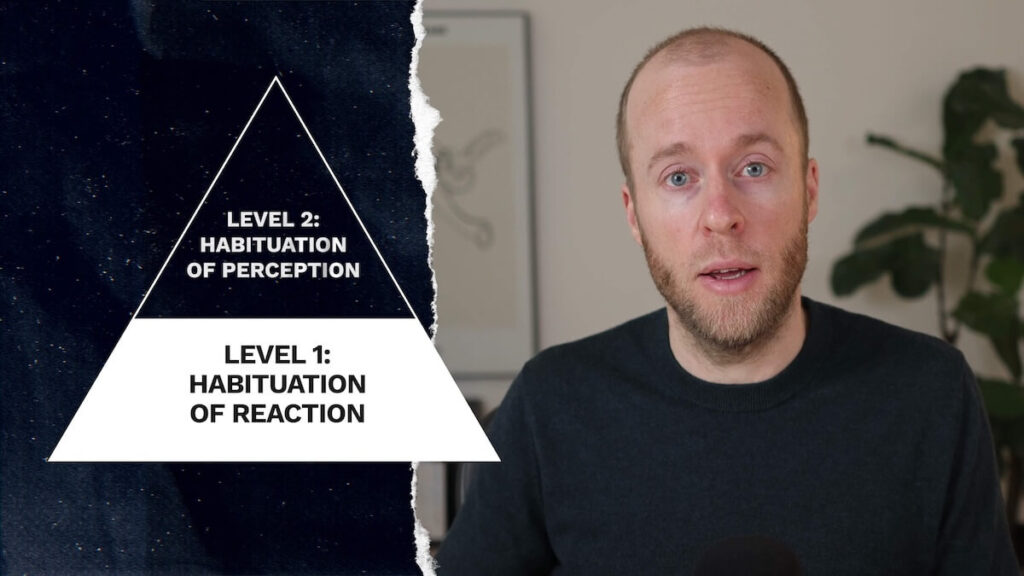
Level 1: Habituation of Reaction
You stop reacting emotionally to the sound. No more anxiety, fear, stress or frustration. Your sleep normalizes, and the sound loses its power to disturb you. Your happiness is no longer coupled to the intensity of the sound.
Level 2: Habituation of Perception
Over time, you start to hear your tinnitus less often and less intense. Many people even experience full silence for periods of time. If the sound returns, it no longer upsets you. You know how to stay calm and let it fade again.
Get Help For Maximum Results
Habituation, while powerful, can be hard to do yourself. Let’s compare it to skiing. Imagine trying to learn to ski all on your own. You manage to get down the slope, but with poor technique and limited control. Over time, those bad habits become ingrained. When you finally take a lesson, the instructor says: “You’ve been doing it wrong from the start. That’s why you keep failing. You need to unlearn what you’ve taught yourself”. The longer you’ve practiced the wrong technique, the harder it becomes to undo it and relearn the proper form. It’s the same with tinnitus. The longer you stay stuck in the wrong approach, chasing miracle cures and constantly switching strategies, the harder it becomes to reach habituation level 2.

Stop Searching, Start Learning
What you should do now: Stop looking for miracle cures, they don’t exist. Be critical of social media advice and unproven treatments. Focus on habituation, and get help if your tinnitus isn’t improving. You don’t have to keep suffering. Even without a cure, meaningful and lasting recovery is within reach.
If you’re interesting in habituation, I recommend joining my free tinnitus webinar. There, I will explain how the Still Tinnitus method can help you to calm your tinnitus and reclaim your life, without traveling, wait times, or group sessions. Even though there’s no cure for tinnitus, a full recovery is possible. Hang in there, and see you in the webinar!