Many people wonder whether stress can trigger or worsen tinnitus. Based on my experience helping over 1,000 people, I would estimate that stress plays a role in about 2/3 of the cases I’ve seen. Stress doesn’t just contribute to the onset of tinnitus, it can also make the condition feel much worse.
Let’s explore this step by step so you can understand how stress connects with tinnitus and what you can do about it.
How stress can cause tinnitus
Tinnitus rarely has a single cause. Instead, it usually involves a combination of hearing loss and resilience—your overall health, energy levels, and ability to cope with life’s challenges.
Imagine this scenario: you have some degree of hearing loss (the blue pillar in the image below), whether from years of working in construction, attending loud festivals without earplugs, or simply aging past 60. Your brain receives a distorted signal from your ears. But if you are otherwise healthy—eating well, exercising, managing stress, and feeling energetic—your brain has enough resources to compensate for this hearing loss. This is the red pillar in the image below, which can hold up the blue pillar meaning you don’t notice any tinnitus.
Now let’s change the situation. If your resilience drops because of prolonged stress, your brain no longer has the energy to “fill in the gaps” from your damaged hearing. That’s when tinnitus often begins. In fact, I’ve seen many people develop tinnitus during or right after a stressful period.
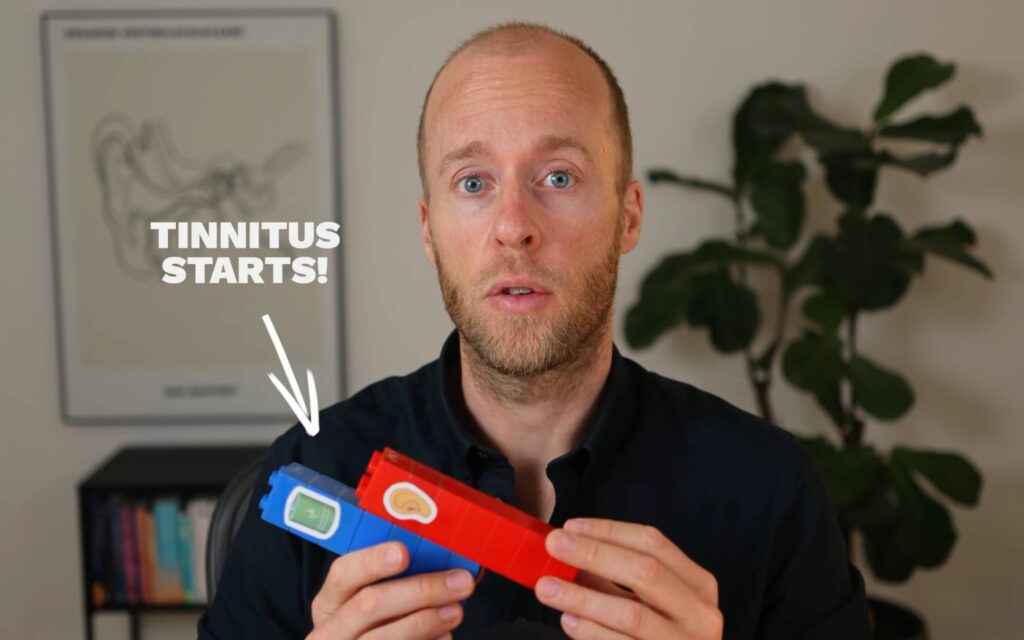
The same happened to me: I worked too hard for years, carried enormous stress, and eventually burned out. My brain couldn’t keep up anymore, and when I heard tinnitus, it became problematic.
So what is it that makes stress cause tinnitus?
Reasons stress contributes to tinnitus onset
- Stress drains your brain’s energy, making it harder to repair distorted signals coming from the damaged hair cells in the cochlea of your ear. The more hearing loss you have, the more difficult it is for your brain to process sound.
- Chronic stress puts you in fight-or-flight mode and on ‘high-alert’ for each and every sound you hear. You’re responding to your tinnitus sound like our ancestors would to a wild animal rustling in the bushes: warning, danger!
- Stress-related fatigue lowers your ability to cope with changes in your hearing system.
How stress can make tinnitus problematic
Just because you hear tinnitus doesn’t mean it will necessarily become a problem. The real difference lies in how your brain responds to the sound. I want to share two personal stories to explain this using the illustration below:
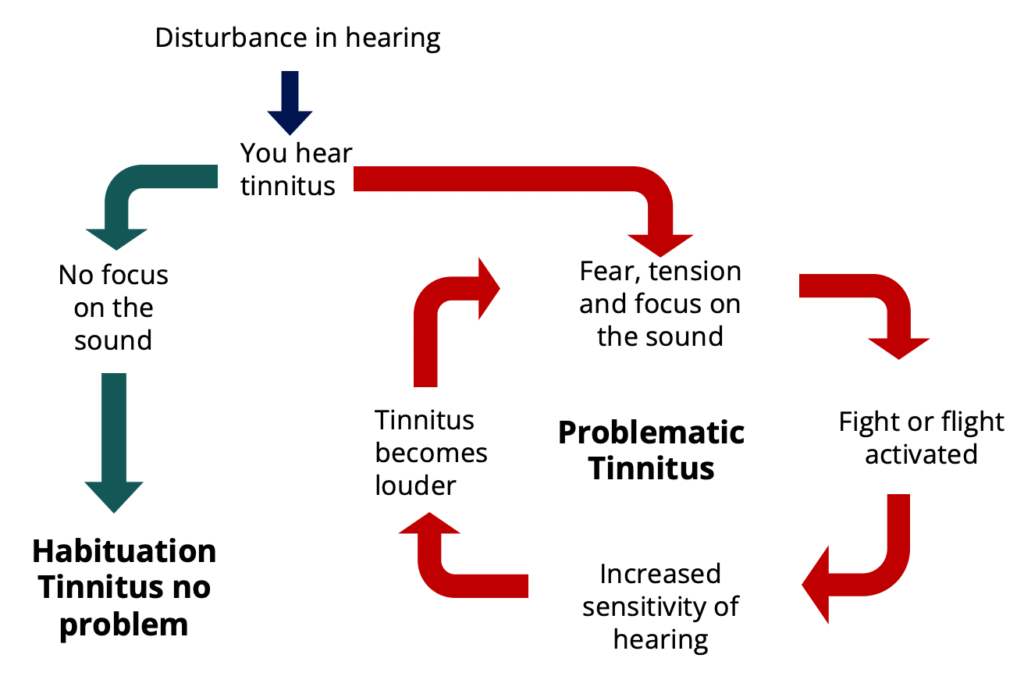
One of my friends (the green path), a laid-back surfer, developed tinnitus but quickly dismissed it. He thought, “My neighbour has this too, it’s just the sound of your brain.” He didn’t obsess over it or search endlessly for cures. Over time, his brain simply adjusted, and tinnitus stopped bothering him.
For me (the red path), things went very differently. I was already extremely stressed when my tinnitus appeared. Instead of brushing it off, my brain went into overdrive. The sound triggered my fight-or-flight response. Because I was so tense and anxious, my brain associated tinnitus with danger. That fear only amplified the sound and made my stress worse. A vicious cycle began, where stress fuelled tinnitus, and tinnitus fuelled more stress.
The vicious tinnitus cycle
This is how stress creates a vicious cycle making your tinnitus worse:
- A calm response can help the brain naturally adjust to tinnitus.
- Stress heightens fear and tension, making tinnitus louder and more intrusive.
- A vicious cycle often forms: stress worsens tinnitus, which increases stress.
How to stop tinnitus caused by stress
The good news is that while you can’t change hearing loss—since damaged hair cells in the ear cannot regenerate—you can absolutely strengthen your resilience and break the cycle. The key is twofold:
- Understand what is happening in your brain so you no longer fear tinnitus.
- Improve your resilience by reducing stress and restoring your energy levels.
I’ve developed a scientifically proven method to help people rebuild resilience and retrain the brain’s response to tinnitus. When this second pillar comes back up, tinnitus stops being a problem and often fades into the background. In my experience, this is the turning point for many people who once thought their situation was hopeless.
Free Tinnitus Training
If you found this helpful, I recommend joining my free tinnitus webinar. There, I will explain how the Still Tinnitus method can help you to calm your tinnitus and reclaim your life, without traveling, wait times, or group sessions. Even though there’s no cure for tinnitus, a full recovery is possible. Hang in there, and see you in the webinar!