If you have tinnitus there’s about an 80% chance it’s related to your hearing. But how do you know for sure? Tinnitus can come from different causes, and while hearing loss is the most common, there may be other medical or environmental factors involved. In this article, I’ll walk you through 5 practical steps to help you find out whether your tinnitus is connected to hearing loss or something else, and what you can do next.
Step 1: Visit your doctor
Your first step should always be to see your general practitioner (GP). A medical check-up is important because certain health conditions can sometimes trigger tinnitus. Rare but possible causes include otosclerosis, Ménière’s disease, and high blood pressure.
Rare medical conditions for tinnitus
- Otosclerosis (a bone growth in the middle ear)
- Ménière’s disease (a disorder affecting balance and hearing)
- High blood pressure and circulatory issues
Your doctor will rule out any serious medical issues. If needed, you can request a referral to an ENT (ear, nose, and throat) specialist for further testing. In the Netherlands, where I’m from, this is covered by insurance but waiting lists can be long—sometimes several months. So if you’re worried or unsure about your GP’s advice, schedule an ENT appointment as it may take a while before they’re able to see you.
Step 2: Get a professional hearing test
After your doctor visit, the next step is to check your hearing with an audiologist. Even if you can’t reverse hearing loss, it’s important to get an understanding of how healthy your hearing is.
Make sure the test is done in a professional sound-proofed cabin. Some quick tests at local shops may not give accurate results, which could lead to wrong conclusions. During the test, you’ll listen to beeps at different volumes and frequencies, and press a button when you hear them. The results are recorded on an audiogram.

Why a sound-proof cabin matters
- Eliminates background noise interference
- Ensures test results are accurate
- Provides a reliable basis for next steps
Step 3: Learn to read your audiogram
An audiogram shows how well you hear different frequencies, from low (125 Hz) to very high (8,000 Hz). The vertical axis shows hearing loss in decibels (dB), with 0 meaning perfect hearing. The further the line drops down, the more hearing loss you have.
For example, in my own audiogram, my hearing is excellent until around 4,000 Hz, where it starts to dip to about -25 dB. This drop helps explain why I experience tinnitus in my left ear.
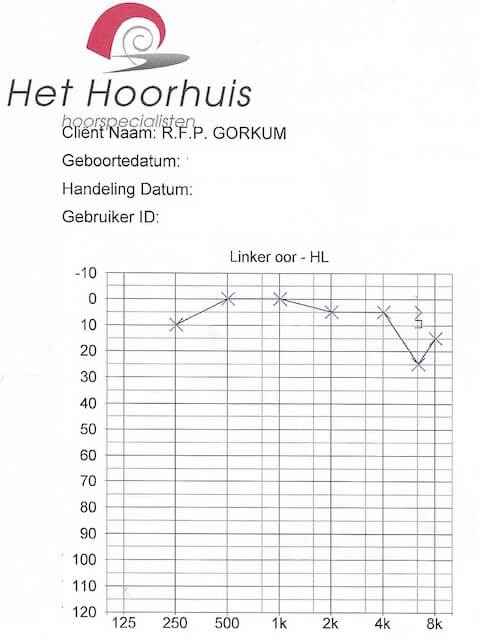
Your audiologist will explain whether your results are typical for your age or show significant loss. However, it’s important to remember that tinnitus doesn’t always come from hearing loss. Many people experience tinnitus even with normal test results.
General hearing loss indications
- 0 dB = perfect hearing, usually in children
- -10 to -20 dB = normal or near-normal hearing
- Over -35 to -40 dB = noticeable hearing loss, hearing aids can be beneficial (especially if hearing loss is around the 1000-4000Hz speech range)
Step 4: Follow your audiologist’s advice
Based on your results, your audiologist will generally recommend one of two things.
Common hearing test results
- Advice 1: If your hearing is fine for your age, you don’t need hearing aids.
- Advice 2: If you have more than 35–40 dB of loss, hearing aids will be recommended in most cases
Hearing aids can often reduce tinnitus perception because they amplify outside sounds, making the ringing inside your head seem less loud. But don’t cure tinnitus, and the effect disappears when you take them out at night, but many people still find them helpful.
Some audiologists may suggest hearing aids with masking sounds, but in my opinion, this older approach to Tinnitus Retraining Therapy is not always necessary. There are simpler methods that can bring relief.
Step 5: Protect your hearing going forward
In more than 80% of cases, tinnitus is linked to some degree of hearing loss. Hearing loss occurs when tiny hair cells in the cochlea are damaged. Unfortunately, once damaged, these cells cannot be repaired. That’s why protecting your hearing is critical.
Situations where earplugs help
It’s important to protect your ears in situations like:
- Concerts or live music events (use filtered earplugs instead of foam)
- Workplaces with loud machinery
- Any environment with sustained loud noise
Special earplugs with music filters allow you to enjoy sound without harming your ears. If you’re in noisy work conditions, heavier-duty protection may be needed.
What to do next
If your tinnitus is connected to hearing loss, don’t be hard on yourself. You can’t repair the damaged hair cells, but you can take steps to protect your ears and manage tinnitus effectively. In my own journey, I’ve seen my tinnitus drop from a 9/10 to a 1/10, with many days being completely silent.
If you want to learn how I did that, I recommend joining my free tinnitus webinar. There, I will explain how the Still Tinnitus method can help you to calm your tinnitus and reclaim your life, without traveling, wait times, or group sessions. Even though there’s no cure for tinnitus, a full recovery is possible. Hang in there, and see you in the webinar!